

|By Gale Staff|
In 1998, Michael J. Fox announced his early-onset Parkinson’s diagnosis publicly for the first time. The information was not new to him, however. The beloved actor, best known for his performances in Back to the Future and Teen Wolf, had actually received his diagnosis seven years earlier at age 29. Determined to continue his acting career as long as possible, he had kept the information to himself.
Two years after sharing his diagnosis with People magazine, he helped create the Michael J. Fox Foundation for Parkinson’s Research. In the years since, the foundation has provided more than $2.5 billion to research programs and generates further awareness through their partnership in promoting World Parkinson’s Day on April 11. The annual event mobilizes community outreach efforts, educates both healthcare providers and the public, and offers resources for people with Parkinson’s and their loved ones.
To support efforts in your own community, turn to Gale Health and Wellness, an extensive and trustworthy resource designed for the needs a broad, non-specialist audience. Starting with the Parkinson’s disease topic guide, your patrons can search for curated articles, interviews, and video content that spotlights the latest research while elevating the stories and experiences of those living with the disease.

Much more research remains to be done in order to better understand the causes and potential treatments for Parkinson’s. Let’s take a look at what we do know, including symptoms, disease progression and outlook, and current therapies.
Learn the Key Facts of Parkinson’s Disease
Parkinson’s disease is a neurodegenerative movement disorder that causes involuntary motions, tremors, stiffness, and problems with balance, coordination, posture, and movement. The disease affects neurons in the part of the brain that produces dopamine, a neurotransmitter primarily responsible for memory, motor function, and pleasure. When dopamine decreases, the brain has a harder time sending clear, coordinated signals to the body’s muscles, leading to the symptoms characteristic of Parkinson’s.
Prevalence
About 1 million people in the U.S. have Parkinson’s, including approximately 90,000 new diagnoses each year. Because the disease is difficult to diagnose, these numbers are estimates.
The risk for Parkinson’s increases with age, with 60 being the average age of onset. Men are 50 percent more likely than women to develop it. Based on current trends, experts predict that more than 9 million people globally will have the disease by 2030.
The Progression of Parkinson’s Disease
In the early stages, Parkinson’s disease symptoms are few and hard to spot, if they emerge at all. They might include occasional slurring of words or a slight tremor in the arms. Before significant tremors and involuntary movements start to show, additional early signs may include:
- Body pain
- Depression
- Excessive fatigue
- Difficulty distinguishing colors, especially blue and yellow
- Reduced ability to smell
- Difficulty sleeping
As Parkinson’s disease progresses, the symptoms become more frequent and pronounced. Someone with Parkinson’s will notice more shaking that starts in the hands and fingers. Tremors tend to be more pronounced at rest than when a person is moving or performing tasks.
In advanced stages, Parkinson’s disease often causes tremors that disrupt daily activities and self-care tasks like bathing, using the bathroom, and dressing. Most patients also experience a limited range of motion, stiff muscles, and slower movements. Over time, a person with the disease will notice a decline in their ability to talk, walk, write, drive, handle objects, and perform other movement-related tasks. Parkinson’s can even reduce control over automatic movements, such as blinking.
Eventually, the loss of motor control and diminished memory and mental faculties can negatively impact quality of life. Furthermore, a person can develop complications from the disease, such as diabetes, cardiovascular disease, and high blood pressure. Higher rates of mortality tend to occur among men, and individuals with both Parkinson’s and dementia.
Contributing Factors
Research has yet to determine a definitive cause of Parkinson’s disease. Some research has shown that certain people may have genetic predispositions to the disease. For instance, scientists have discovered a potential gene variant that increases the risk of Parkinson’s in people of African descent.
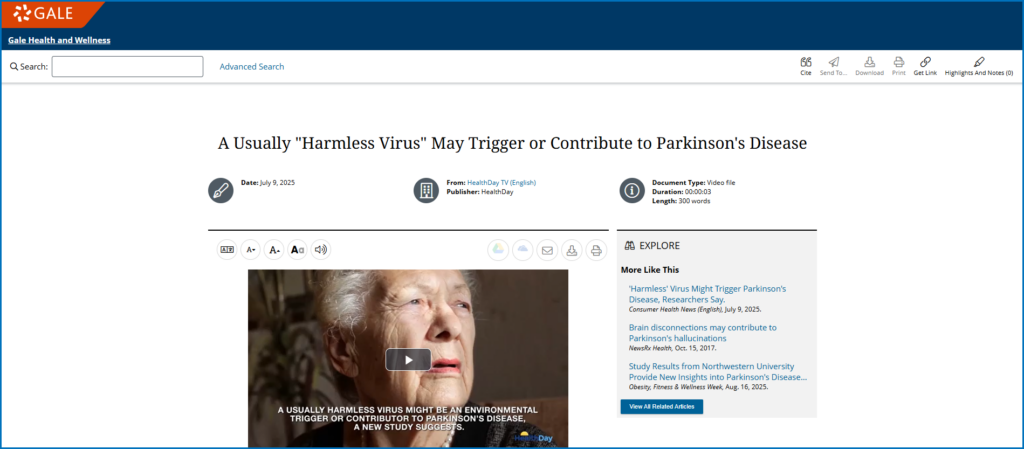
Studies also point to environmental factors, such as chemical exposures or head injuries, that contribute to the condition’s development. For example, eating processed foods can accelerate the progression of early signs of the disease. A possible link may exist between Parkinson’s disease and the presence of the human pegivirus in the brain, which is associated with hepatitis C.
Explore Treatment Options for Parkinson’s Disease
Parkinson’s disease currently has no cure. However, people living with this condition have many options for slowing its progression, treating symptoms, and maintaining quality of life.
Medication
Parkinson’s disease medications can help control many symptoms, including involuntary movements, tremors, and muscle stiffness. Levodopa (L-DOPA), the most common drug prescribed for managing Parkinson’s symptoms, increases dopamine production, helping neurotransmitters perform their functions more effectively.
Researchers are currently investigating an enzyme called leucine-rich repeat kinase 2 (LRRK2), which is found in people with a form of Parkinson’s caused by a genetic mutation. In excess, LRRK2 disrupts signals between neurons in the dopamine system that help control movement, decision-making, and motivation. Developing a medication that inhibits the LRRK2 enzyme could help stabilize symptoms in the early stages of the disorder.
Therapy and Exercise
Research shows that physical therapy and regular exercise can slow the decline in motor control for people living with Parkinson’s disease. Many patients work with a physical therapist to help stimulate muscle movement, improve posture, and maintain balance and gait.
One study found that patients who get a few hours of moderate to vigorous exercise each week experience slower deterioration in walking ability and balance. Another study found that exercising about three times a week can help most individuals with Parkinson’s delay worsening of symptoms for up to six months.
Surgery
Patients who don’t respond well to medication or physical therapy might opt for surgery that enables deep-brain stimulation. During surgery, the doctor implants electrodes into specific areas of the brain. These electrodes connect to a device implanted in the chest that sends signals to the brain to reduce tremors and involuntary movements.
Carol, a person with Parkinson’s disease, underwent this procedure. “I used to love to cook,” she says. With Parkinson’s, however, she had to give that up. “And now, the first year that I had surgery, I made this big Thanksgiving dinner. It took me three days to do it, but I did it all by myself.”
Surgery can also be used to place stem cells in patients’ brains to boost dopamine production. These stem cells develop into dopamine-producing neurons, which help slow the progression of muscle rigidity, poor posture and balance, tremors, and other symptoms that make Parkinson’s disease difficult to manage.
The appropriate medications, therapy, and surgical options can give hope to patients and caregivers dealing with Parkinson’s disease. With early diagnosis and treatments tailored to each patient’s needs and lifestyle, people living with this condition can slow its progression and maintain active, fulfilling lives for many years.
Understand What It’s Like to Live with Parkinson’s Disease
Even with the hope that new treatments offer, Parkinson’s disease can feel like a devastating blow to patients and their loved ones.
Dr. Sue Golden, a physician and public health expert, was diagnosed with Parkinson’s disease in 2021 but waited four years before publicly sharing her diagnosis.
“I think I was really trying to give myself room and time to fall apart, to panic, to think about what it meant for me,” she explains. “And it really was a process that I was going through where I was just trying to really figure out how I could be OK.”
For individuals experiencing advanced symptoms, Parkinson’s can make everyday tasks, like dressing and eating, difficult.
For example, Joe Bremhorst, a Parkinson’s patient, has trouble holding a spoon or other utensils when eating due to his tremors. When he tries to eat his bowl of Cheerios, he says, “the closer I get to my mouth, the worse the tremor gets.”
To make mealtimes easier, San Francisco engineer Anupam Pathak created a spoon called Liftware that vibrates when lifted. The spoon detects the user’s tremors, moves in the opposite direction, and “cancels out” their effects to improve eating.
Reverend Bob Hardman, a 67-year-old Episcopalian priest, offered an in-depth look into his everyday experiences living with Parkinson’s. At the time he told his story to National Public Radio, eating, walking, driving, and other daily activities were a significant challenge. To cope with the tremors, he did things like bring a straw with him when he left home in case he wanted to drink something.
Hardman also talked about his nightmares, common among people with Parkinson’s, who sometimes act out those dreams by kicking, punching, or even falling out of bed while asleep. There is evidence that people who have bad dreams at least once per week are more likely to develop Parkinson’s disease.
Hardman’s dreams were often about being chased. The dreams were vivid enough to cause Hardman to get physical during sleep, even to the point of unintentionally hitting his wife, who slept next to him. The couple learned to accept what they can’t control, and eventually decided to sleep in separate beds.
Stories from people who experience Parkinson’s firsthand can provide valuable insights. Having lived with the disease for more than 35 years, Michael J. Fox is eager for those stories and first-hand experiences to shape the future of Parkinson’s research.
“Parkinson’s patients are the experts on what we have,” Fox says. “We have a responsibility as patients to share our experience—what works for us, what we respond to, what we can contribute to research.”
Partner with Gale to Promote Community Support for Parkinson’s Disease
With a trustworthy partner like Gale, your patrons can gain a more thorough understanding of Parkinson’s symptoms and treatments and learn firsthand from those who live with the condition. Gale Health and Wellness enables people to access accurate, credible information that encourages further research and thoughtful reflection.
You can depend on Gale’s accessibility features to help everyone in your community with their preferred language and learning style. Features include personalized displays, translation options, and text-to-speech, ensuring that all patrons feel included and engaged.
For subscription information, contact your local Gale representative today. Don’t forget to ask about our trial access.