

|By Gale Staff|
This year, National MS Awareness Week runs from March 8–14, shining a light on a disease that affects nearly 1 million Americans. For those living with MS, or multiple sclerosis, and the family and friends who support them, this week is an opportunity to raise awareness and highlight the importance of research, education, and supportive treatment.
MS is a chronic disease that affects the central nervous system. It can be unpredictable, affecting people differently depending on the type of MS they have, co-occurring conditions, how early it is diagnosed, and symptom management. At the same time, advances in treatment mean that many people with MS can live full, active, and meaningful lives.
To help raise awareness during National MS Week and all year round, turn to Gale Health and Wellness for authoritative content in an accessible format designed to meet people where they are—whether they’re seeking to understand a new diagnosis, how best to support a loved one, or simply interested in learning more about MS.
What Is Multiple Sclerosis?
Multiple sclerosis is a disease that affects the central nervous system, which includes the brain, spinal cord, and optic nerves. When a person has MS, the immune system mistakenly attacks myelin, the protective covering around nerve fibers. Myelin damage affects communication between the brain and the rest of the body, leading to a wide range of symptoms.
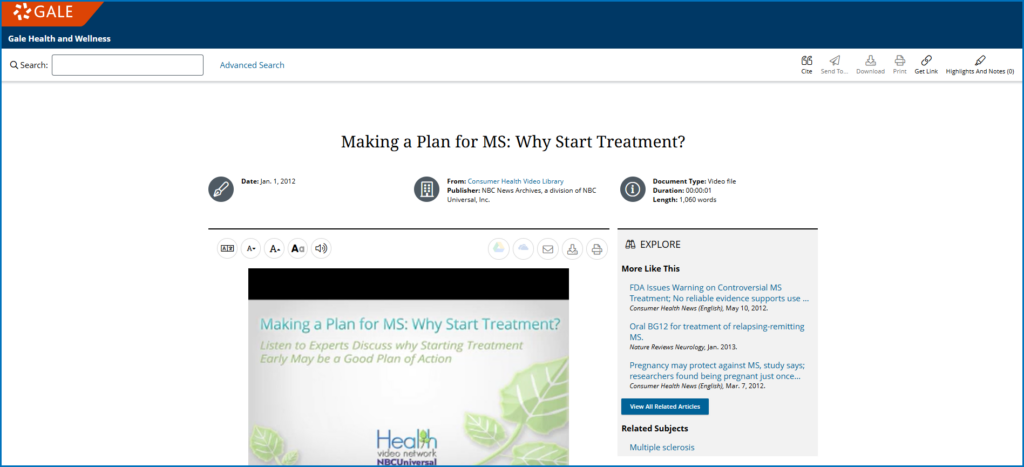
Researchers do not yet know exactly what causes MS, but it is believed to result from a combination of genetic and environmental factors. MS is most commonly diagnosed between the ages of 20 and 40, and women are two to four times more likely to be diagnosed than men.
The reassuring reality is that, while MS is a lifelong condition, many people are able to live full and rewarding lives, and the life expectancy with MS is close to that of the general population. Early diagnosis and intervention, proactive medical treatment, and access to accurate information all contribute to better long-term outcomes.
Nonetheless, the diagnosis can feel overwhelming for many people. That’s entirely normal. And this is where reliable information found in Gale Health and Wellness can help individuals and families move from uncertainty to understanding.
Early MS Symptoms
One of the challenges of MS is that symptoms can vary widely from person to person. Some individuals experience mild symptoms that come and go, while others may face more persistent or disabling challenges.
There are several different types of MS:
- Relapsing-remitting MS, characterized by symptom attacks followed by remission periods
- Primary progressive MS, which begins with intermittent symptoms that worsen over time
- Secondary progressive MS, in which symptoms progressively worsen over time
Common MS symptoms include:
- Fatigue that interferes with daily activities
- Numbness or tingling in the limbs
- Motor challenges, including muscle weakness or stiffness
- Vision problems, such as blurred or double vision
- Difficulty with balance or coordination
- Cognitive changes, including memory or concentration issues
The first signs of MS are often subtle and may be mistaken for other conditions. In the early stages, people with MS frequently report vision changes, unexplained numbness, or prolonged fatigue. Because these signs can come and go, people often delay seeking medical advice, which can postpone diagnosis.
How MS Is Diagnosed
There is no single test that definitively diagnoses MS. Instead, an MS diagnosis typically involves a combination of medical history, neurological exams, imaging studies (such as MRI), and sometimes a spinal fluid analysis.
It is important to emphasize that self-managing symptoms with help from educational resources—even high-quality ones—does not replace medical care. Someone suspecting that the symptoms they are experiencing might be MS should speak with a medical professional to undergo expert evaluation and, if diagnosed, begin an appropriate treatment plan. Gale Health and Wellness can support patients through this process by offering content grounded in peer-reviewed research from reputable medical organizations, free from potentially misleading content from sponsor-backed sources.
Treatment and Living Well with MS
Although there is currently no cure for MS, treatment options have expanded significantly over the past few decades. Disease-modifying therapies can reduce the frequency and severity of relapses for many people, while symptom-focused treatments address pain, spasticity (uncontrolled muscle movement), fatigue, and mobility challenges.
Lifestyle supports are equally important. This can include physical therapy, mental health care, stress management, and community connection. With the right care plan, many people with MS continue to work, raise families, pursue hobbies, and enjoy rich and fulfilling lives.
With Gale Health and Wellness, users can explore articles on new therapies, supplemental treatments, and approaches to wellness—all presented in a balanced way that emphasizes support, education, and hope while navigating a new way of life.
Learning from Lived Experience
Medical information is essential for helping people who live with MS, but firsthand accounts from people living with MS provide insight into the emotional, social, and practical aspects of the disease that statistics alone cannot capture.
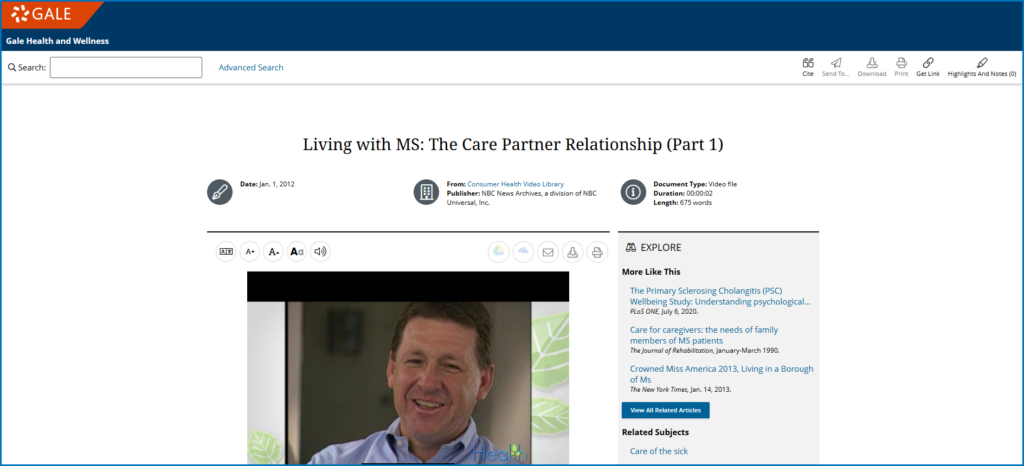
With Gale Health and Wellness, users can access patient stories, interviews, and multimedia content that highlight diverse experiences within the MS community. These narratives can be especially valuable for individuals who feel isolated or who are newly diagnosed, offering reassurance that they are not alone and that many paths forward are possible.
“I think gratitude is a choice,” says Jeff Beal, the Emmy-winning composer, who lives with MS. “I decided very early on that I can’t control that this has happened to me, but I can control how I respond to it. Listen, there’s stages of anger and grief and mourning and shame that go into having any sort of illness. But for me, at the end of the day, I realize how lucky I am, and I realize how lucky I am to be a musician and how much that’s given me.”
For friends and family members, these stories foster empathy and understanding, helping them learn how to be supportive allies. Libraries that promote access to these resources during National MS Week help create more informed, compassionate communities.
Trusted Health Information Matters
In an age of endless online content, finding accurate medical information can be challenging. Search engines and social media offer sponsored content or anecdotal advice rather than evidence-based material. This is where you need a trustworthy partner to support your library patrons and your broader community.
Gale Health and Wellness curates content from reputable medical sources and presents it in a way that is accessible to non-specialists. Our accessibility tools, including adjustable fonts and text-to-speech functionality, ensure that information is usable for people with vision challenges, brain fog, and physical fatigue—concerns that are particularly relevant within the MS community. By guiding patrons to trusted databases rather than unverified websites, libraries reinforce their role as essential partners in public health education.
The Role of Libraries During National MS Week
National MS Week is an ideal time for libraries to highlight health and wellness resources, host educational displays, and share new research that supports learning and awareness. Even a simple reminder that authoritative tools are available through the library can make a meaningful difference for someone seeking answers.
Gale Health and Wellness helps to provide a clear, compassionate overview, as well as information relevant to specific groups of people living with MS. This approach empowers individuals to explore the topics most relevant to their own experiences.
Moving Forward with Knowledge and Hope
MS may be a lifelong condition, but it does not define a person’s entire life. With growing awareness, continued research, and access to reliable information, people with MS are better equipped than ever to navigate their health journeys.
For anyone seeking to learn more about MS symptoms, diagnosis, treatment options, or lived experiences, Gale Health and Wellness is a valuable starting point—one that supports informed questions and a deeper understanding of what it means to live well with MS.
Reach out to your Gale representative today to learn more about how you can offer your library patrons Gale Health and Wellness.