
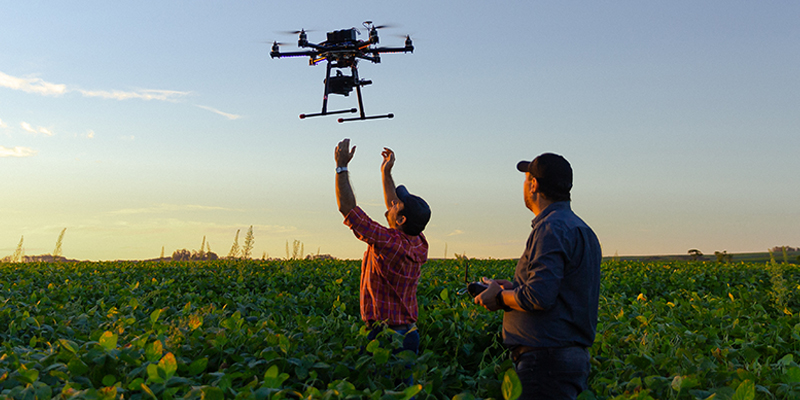
Delivering medical supplies to remote areas. Spying on celebrities. Inspecting power lines while keeping workers safe. Smuggling contraband into prisons and detention facilities. All of these diverse functions—positive and negative—are possible with the flying robots we know as drones.
These pilotless aircraft help speed up the delivery of goods and supplies, enhance security, and support environmental initiatives.They also elicit controversy due to privacy and safety concerns, wildly inconsistent (and often lacking) regulations, and harms from military use.
To help your students think critically about both sides of the issue, turn to Gale In Context: Opposing Viewpoints. Starting with the drones topic page, you can explore curated news articles, opinion pieces, segments from programs like All Things Considered, videos, and a wealth of other resources to support an informed and well-rounded discussion.
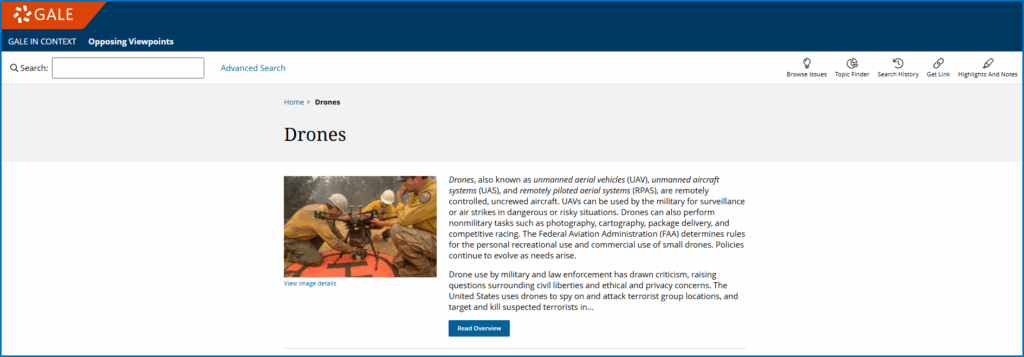
Gale provides the forum for your students to consider all perspectives regarding the presence of drones in everyday life. Before we consider their pros and cons, let’s first explore what drones are in all their different shapes and sizes. Then, we’ll take a look at their current and potential uses, ethical and regulatory issues, and introduce some thoughtful critical thinking questions to guide your classroom discussions.
Understand the History and Development of Drones
Drones are remotely controlled aircraft that don’t require an in-vehicle pilot. They can range from plane-like aerial craft to much smaller devices. One developed by Chinese engineers weighs less than a nickel and fits in the palm of your hand.
The U.S. military began developing pilotless aviation technology during World War I, with the earliest models designed to explode upon impact when dropped on targets. World War II saw slight improvements in this type of technology, with pilots operating the aircraft and parachuting away from the drone before impact.
Today’s drones belong in several different possible categories:
- Remotely piloted aircraft systems (RPAS): Drone controlled from a remote location by a human (e.g., survey drone used for mapping)
- Unmanned aerial vehicles (UAV): Pilotless aircraft that may or may not be remotely controlled (e.g., delivery drone used by the U.S. Postal Service or commercial retailer)
- Unmanned aircraft systems (UAS): The complete system, including controller, sensors, support equipment, data management tools, and software
Currently, approximately 100 militaries worldwide have drone capabilities. UAVs and other devices perform surveillance and conduct targeted air strikes. Drones may be equipped with heat sensors, cameras, and radar to find and attack targets from great distances. In the war between Ukraine and Russia, Ukraine has used attack drones to significant effect when launching offensives into Russian territory that wouldn’t have otherwise been possible.
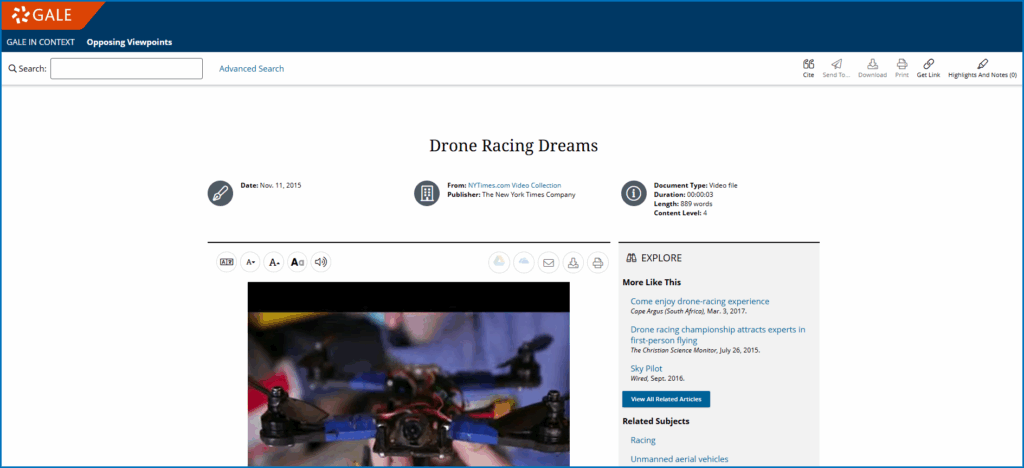
However, not all drones have been developed for military operations. Early in the 21st century, commercial and recreational drone use rapidly expanded. Today, drones aid in photography, entertainment, cartography, data collection, package delivery, security and surveillance, and many other uses. Some people even race drones competitively.
As of December 2024, approximately 403,000 commercial and 387,000 recreational drones were registered with the U. S. Federal Aviation Administration (FAA). However, drones weighing less than 0.55 pounds (250 grams) don’t require FAA registration. With drones becoming increasingly popular, cities, states, and even the federal government have been working to regulate their manufacture and use. At least 44 states have laws governing the appropriate use of drones.
Critical Thinking Questions
- What tasks can you think of that could be aided by the use of a drone? Can you think of future technological developments that could also be helpful?
- Drone use makes it safer for militaries to conduct strikes in foreign countries without compromising troops’ safety—but what about civilians? Does the lack of risk and ease of deployment make it potentially too easy to decide to conduct a military strike that could harm civilians and bystanders?
Consider the Advantages of Drones
Drones can provide valuable assistance in circumstances that would otherwise make the task exceedingly difficult, if not impossible.
For instance, drones have proven helpful in cleaning up the trash accumulating on Mount Everest. In 2024, DJI, manufacturer of the heavy-lift FlyCart drones, collaborated with a Nepalese drone company and a local Sherpa mountain guide to orchestrate a clean-up of the mountain after the climbing season. The drones were capable of carrying up to 100 pounds to pick up and remove leftover oxygen tanks, discarded equipment, and other garbage from hard-to-reach slopes. Such drones can be instrumental in combating the environmental toll of tourism and maintaining our natural ecosystems.
Let’s consider a few other ways that drones can provide unique assistance.
Greater Access
Drones offer greater research opportunities in remote areas such as Antarctica. Scientists are using drones to explore the effects of climate change on this continent, collecting data to determine how quickly ice melts given the terrain, weather, and other conditions.
These pilotless devices also enable work in hazardous environments. For instance, officials in Los Angeles County, California, were able to survey the damage of the most devastated areas after the 2025 Palisades fire safely by using drones. Such devices assist with other dangerous or undesirable tasks, such as inspections of wind turbines and refueling aircraft near war zones.
Speed and Efficiency
Drones have helped large and small companies trim costs and get their products out to customers more quickly. They can even help curb porch piracy—the theft of delivered parcels from people’s homes—by delivering products at scheduled times.
The speed and efficiency of drones also allow them to deliver life-saving drugs and medical supplies quickly. In case of an overdose, drones can deliver naloxone, commonly known as Narcan. Once the drug arrives, a bystander can administer it to the patient in about a minute, thereby increasing chances of survival.
Cost-Effectiveness
Market competition has driven down costs, making drones more affordable to individuals and businesses. The cost savings also manifest in reduced equipment, labor, and time required to perform various tasks. For instance, a construction company can survey land using drone technology in far less time compared with traditional methods.
Improved Safety
Drones can provide public safety benefits, especially for crowded events or high-crime areas. Law enforcement agencies use drones to track people and traffic, conduct surveillance during large-scale events, and even collect evidence. Drones are also valuable for accelerating search-and-rescue operations.
Entertainment
Many public events increasingly use drones for synchronized light shows. Doing so provides new avenues for creative expression while also helping event planners reduce noise, air pollution, and potential fire hazards that often accompany fireworks.
Enhanced Angles for Data Analysis
Meteorologists, cartographers, zoologists, and other professionals depend on drones for more accurate, efficient field data collection. Real estate agents rely on drones to get varied views of land and property that traditional photography can’t capture. Drones are helpful for crop monitoring, equipment inspections, and other forms of data analysis.
Environmental Benefits
With drones, clean-up of environmental pollutants is much easier. They can track oil spills and other equipment breaches in remote areas. Environmental scientists and groups can use drones to track wildlife, monitor their migratory patterns, and identify threats to their populations while minimizing disruptions.
Critical Thinking Questions
- How could drones benefit communities considered to be food deserts or those with limited access to healthcare and other essential resources?
- What ethical principles should come into play even when drones are used for positive or pro-social purposes, such as aiding in search-and-rescue missions or delivering emergency medical supplies?
- What other technologies could supplement drones to further enhance their benefits, such as more detailed or more explicit imaging or systems powered by artificial intelligence?
Reflect on the Potential Drawbacks of Drones
Although drones offer benefits in many situations, they also raise concerns about privacy, ethics, safety, and other issues. Let’s take a look at some of the drawbacks and challenges of drone technology.
Privacy Concerns
Drone use raises important questions about violations of privacy and civil liberties. Drone use in police surveillance can potentially collect information and footage of private residences and people who aren’t connected to a particular investigation.
Privacy issues can also arise when drones are used to enforce public safety measures, especially if this type of surveillance potentially violates civil liberties. For instance, in 2021, France banned authorities from using drones to monitor COVID-19 social distancing because the devices could record people’s faces and other identifying features without their consent.
These concerns aren’t limited to official police use. Amateur drone use can unintentionally collect sensitive information or violate others’ privacy rights. For example, a social media influencer using a drone to record their travel experiences may capture images of unsuspecting individuals who might appear on their channel without their consent.
Other abuses might be less innocent—such as stalking. Others have used drones to peek into neighbors’ gardens or backyards to record children playing. Beyond the obvious infringement on privacy, it can be challenging to figure out how to stop such behavior or report it to the appropriate authorities. Some people fear that drones may be used to survey homes or businesses that are susceptible to burglary.
Safety Risks
Another aspect of drone use that could require more attention is safety, especially for drones that don’t require a license or permit to operate. Careless or inattentive use can cause drones to crash into people, animals, or property—particularly in densely populated areas or with equipment that may be prone to malfunctions or hacking.
Harms from Military Use
Military drones have raised controversy because of the widespread injuries and deaths they cause. Although intended for precision, many drone attacks have resulted in inaccurate targeting and a high frequency of civilian casualties. For instance, in targeting ISIS “safe houses” sheltering suspected terrorists, U.S. drone attacks killed innocent families in Afghanistan.
In addition to the initial destruction, drone attacks can have lasting effects on the communities and countries where they are deployed. The ongoing threat of strikes can lead to anxiety, fear, and uncertainty among civilians, disrupting everyday life and commerce. Moreover, military drone strikes that cause a disproportionate number of civilian casualties can create mistrust, resentment, and hostility, potentially creating further obstacles to peace.
Regulatory Uncertainties
The FAA maintains authority over the recreational and commercial use of small drones. At the state and federal levels, laws cover issues such as registration requirements, privacy protections, flight range limitations, restricted air spaces, and permitted recreational or commercial use. Many cities and municipalities have also passed their own ordinances regulating drone use, such as prohibiting drones from flying over police stations or public parks.
However, as with any new technology, regulations are struggling to keep up with drones’ emerging uses and growing popularity. Some critics have argued that drone regulations aren’t strict enough, while some drone enthusiasts oppose tighter regulations, claiming that stricter laws could hinder innovative drone applications or discourage people from exploring the technology.
Critical Thinking Questions:
- Imagine you notice a drone flying near your house. At first, it just seems weird—you don’t think twice about it. But then it happens again. And again. The more it happens, the more you suspect it might be monitoring your house. How do you report this sort of behavior? Should drones be required to carry identifying information that would allow bystanders to verify who they belong to?
- Should drone ownership require licensing to ensure that the operator has adequate training to pilot it safely?
Partner with Gale to Facilitate Balanced Discussions About Drone Technology
Partnering with a reliable academic source like Gale allows your students to access trustworthy information and explore questions that encourage critical thinking about drones. Instead of telling students what to think, Gale In Context: Opposing Viewpoints invites them to consider the facts and form their own opinions.
This extensive database offers a balanced view to support classroom discussions and promote meaningful debate. Contact your local Gale representative today for more information about becoming a subscriber.