

|By Gale Staff|
At a time when many students are struggling with mental health challenges, schools have an opportunity to ensure they’re doing their part to help. To address this rising issue, schools should consider adopting a whole child approach—acknowledging that a student’s overall wellbeing is connected to their academic success. Together, we can ensure students thrive in all areas of life.
The Link Between Mental Health and Learning
Studies show that students with mental health challenges face a 62% higher risk of poor academic performance. These challenges often manifest as lower motivation, concentration, and engagement in class. Schools can play a key role in supporting students through these issues by providing them with essential mental health services. Easy and reliable access to these resources goes a long way toward helping students succeed academically. In fact, a meta-analysis of over 270,000 K–12 students found that those in school-based mental health programs improved academic performance by 11%.
What Schools Are Doing
There are a variety of wellness initiatives schools can integrate into everyday learning. It’s critical that we not only support students, but also alleviate pressure on educators and staff who may not have the training or resources to effectively deal with a student’s mental health crisis.
Some schools are implementing multi-tiered systems of support (MTSS), a framework that provides universal, targeted, or intensive support to students based on their individual needs. Each tier prioritizes the accessibility of advisory programs, mental health and wellness activities, and specialized counseling for students.
Making Wellness Part of Daily Learning
Schools can also cultivate wellness practices in students’ everyday learning, encouraging practical and simple habits they can incorporate into their routines. A few examples that have been proven to reduce anxiety and improve focus include:
- Journaling
Students can write about their thoughts, feelings, or even moments of gratitude. - Emotional Check-ins
Students can take a moment each day to check in with a peer or faculty member. During this time, they can openly express feelings of stress, anxiety, or depression. - Mindfulness Minutes
Educators can include this simple practice during class time, having students take a few minutes at the start or end of each day to work through deep breathing, meditation, or quiet stillness.
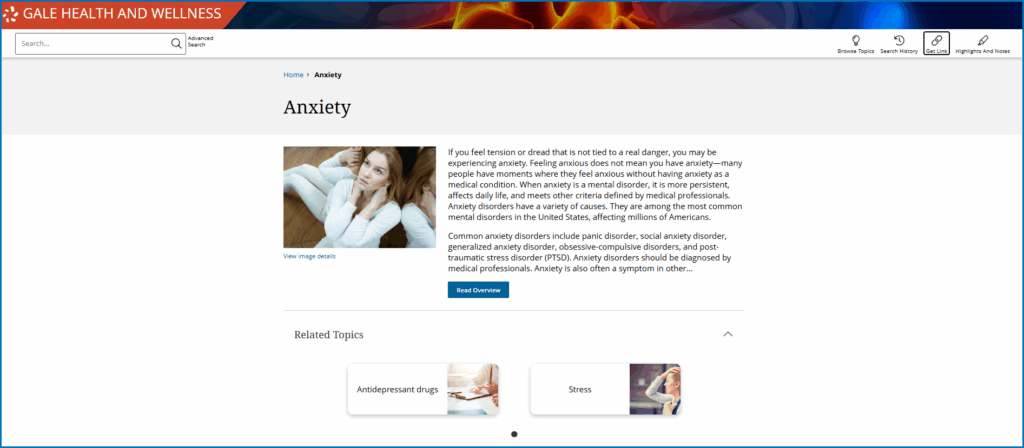
Valuable Resources Right at Your School’s Fingertips
In partnership with the Cameron K. Gallagher Foundation, Gale created Cameron’s Collection and Cameron’s Camp for Wellness, both of which offer targeted, age-appropriate mental health resources that easily integrate into classroom routines. Available on the Gale eBook platform, these collections offer discreet access for students to reference anytime, anywhere, and on any device.
Additionally, Gale eBooks: Professional Learning provides educators with titles from trusted voices like ASCD, Corwin Press, ISTE, and Solution Tree. From navigating sensitive topics such as grief and bullying to burnout prevention and cultivating safe, inclusive classrooms, these eBooks help educators prioritize self-care and approach challenging conversations with confidence.
Conclusion
Student success is not one-dimensional. By offering students access to quality mental health and wellness resources, and equipping faculty and staff with tools to facilitate those offerings, schools can clear the path to students’ academic success.
Reach out to your local Gale education consultant to explore how Gale’s mental health and wellness resources can be integrated into your school’s curriculum as part of a comprehensive and holistic approach.