
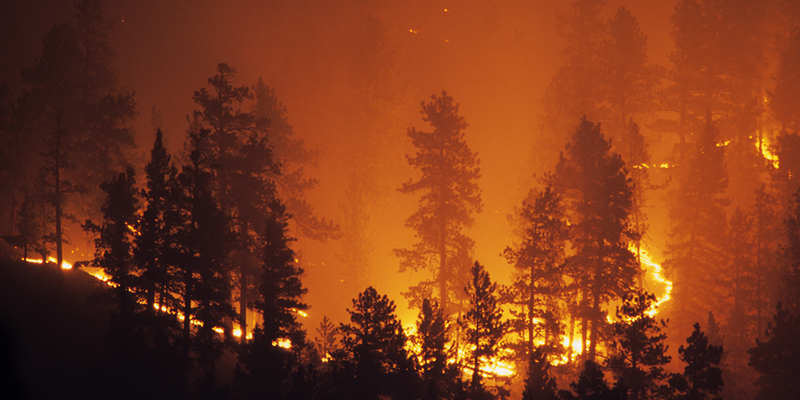
Across North America, wildfire risk is no longer confined to a handful of regions or a single season. Even communities that aren’t directly affected still feel the impact from smoke-covered skies that disrupt daily life with school closures and the cancellation of outdoor activities.
Regardless of where we live, wildfires are no longer something we can afford to ignore. Gale In Context: Environmental Studies provides accurate, up-to-date resources to help students better understand wildfires across North America—and around the world.
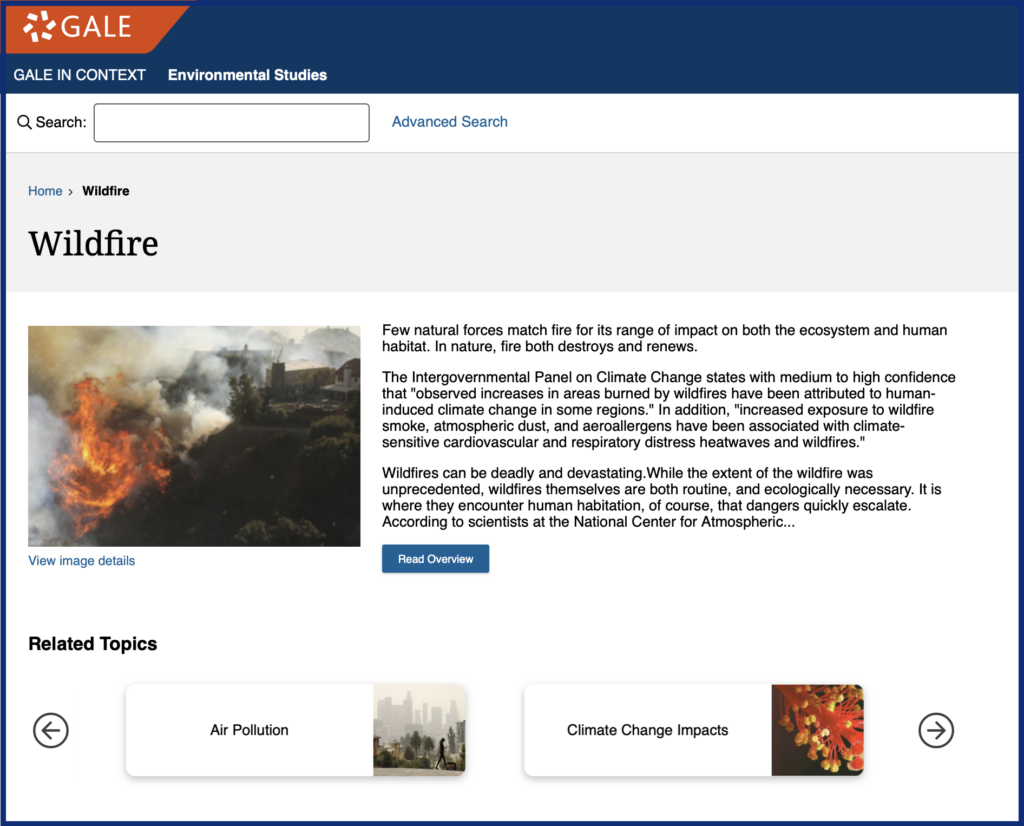
Observed on the first Saturday in May each year, Wildfire Preparedness Day highlights both the urgency of this issue and the power of collective action. This is an important opportunity to raise awareness and strengthen safety practices in your community. With wildfire activity in North America steadily increasing over the past decade—and experts predicting that this pattern will continue—prevention and preparation have become an essential part of community well-being.
Educators already know that knowledge is power. So, let’s take a look at how Gale In Context: Environmental Studies can equip your students with the information, perspective, and resilience they need to act today for a better world tomorrow.
The Causes (and Conditions) Behind Wildfires
Human actions ignite most wildfires, but environmental conditions determine their severity. A carelessly discarded cigarette might smolder harmlessly in cool, damp conditions—but during drought periods with low humidity and high winds, that same spark can trigger a fire that spreads across thousands of acres in hours.
The 2023 Maui wildfires demonstrated how quickly conditions can turn deadly: winds exceeding 60 mph combined with drought-stressed vegetation, spurring flames on at astounding speeds and forcing residents to evacuate within minutes of the alarm. Wildfire season—a time of low precipitation and high temperatures—makes wildfires especially common in certain regions. Education and awareness work together to support prevention efforts.
Understanding Wildfires and Ecological Balance
At the same time, wildfires are not solely destructive forces. Fire can be ecologically necessary. Some ecosystems rely on periodic fire to clear dense undergrowth, return nutrients to the soil, and support new plant growth. Understanding this balance—between protecting communities and recognizing fire’s natural role—helps students move beyond oversimplified narratives.
Gale In Context: Environmental Studies supports this kind of nuanced exploration with trusted content, including reference articles, news stories, research from leading scholars, and dynamic multimedia content. Together, these resources empower students to approach the topic from a variety of disciplinary approaches: ecological, historical, media studies, public planning, and more.
A Shared Challenge
Environmental challenges are interconnected, their impacts far-reaching, and the responsibility to address them a shared undertaking. The realities of wildfires illustrate this with startling clarity. To address their impacts and minimize the dangers, we must act together in a spirit of cooperation, guided by informed decision-making and a willingness to think beyond local lines.
Keep investigating the planet’s interconnectedness and our shared global responsibility by learning about World Pollution Prevention Day.
Prevention Starts with Everyday Choices
Preparation and prevention offer clear paths forward. There are meaningful actions individuals, classrooms, and communities can take to reduce risk and improve safety.
At the individual and school levels, prevention includes:
- Following local restrictions on campfires, fireworks, and outdoor burning during dry periods
- Keeping school grounds clear of dry leaves, brush, and other flammable materials
- Reviewing and practicing emergency plans so students and staff know how to respond if smoke or fire affects the area
These steps reinforce an important lesson: responsibility is practical and ongoing. Small actions, repeated consistently, become habits that can make a real difference.
Prevention at the Community Level
At the community, regional, and national levels, prevention requires a broader approach:
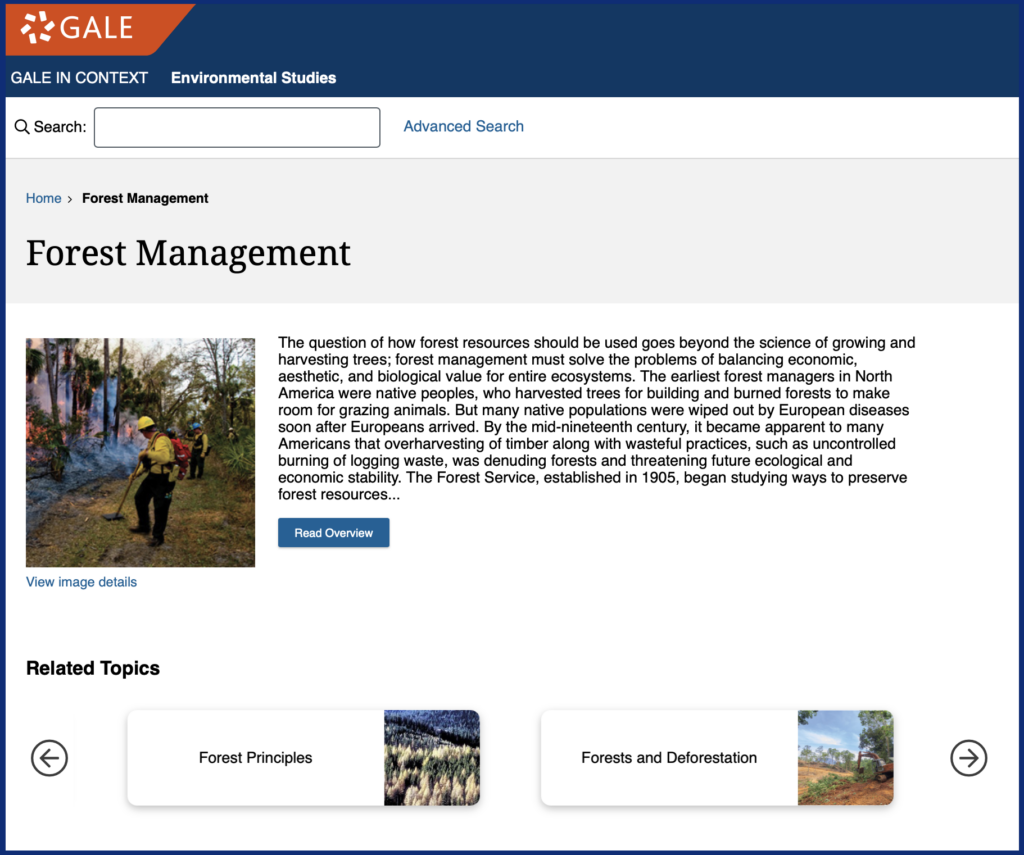
- Thoughtful land and forest management to reduce excessive fuel buildup
- Planning infrastructure and development with fire risk in mind
- Public awareness campaigns, such as Wildfire Preparedness Day, that keep safety information current and visible
As wildfires evolve, wildfire prevention and management efforts will need to evolve as well. Instilling critical thinking skills around wildfires in today’s students can make a difference in the future of our environment.
Looking Ahead with Knowledge and Confidence
Wildfires present serious challenges, but they also offer opportunities for learning, preparation, and collaboration. When students understand the causes, impacts, and prevention strategies associated with wildfires, they are better equipped to respond thoughtfully rather than fearfully.
Wildfire Preparedness Day reminds us that resilience is built over time. Through education, planning, and shared responsibility, schools and communities can take meaningful steps to protect people, support ecosystems, and prepare the next generation to lead with knowledge and care.
If you’re not a Gale subscriber, reach out to your local Gale representative today.