
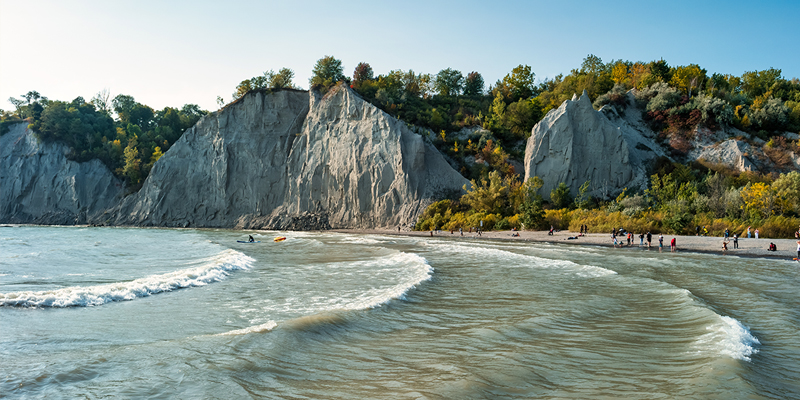
The Great Lakes are remarkable. Containing approximately 20% of the world’s fresh surface water—in the neighborhood of six quadrillion gallons—millions of people across Canada and the United States depend on them for their livelihood.
But once you dive beneath the surface-level facts—five lakes, enormous volumes of freshwater, and a longer contiguous coastline than either the east or west coast—the Great Lakes are even more fascinating. The Great Lakes are not only geological marvels, but living classrooms shaped by glaciers, migration, Indigenous knowledge, trade, conflict, innovation, and modern environmental challenges.
With Gale In Context: High School, educators can help students explore these layered narratives in ways that go beyond a textbook overview. By connecting past and present, science and society, we can frame the Great Lakes as dynamic systems that continue to influence daily life across the U.S. and Canada.
Shaped by Ice and Time
The story of the Great Lakes begins long before recorded history. Over tens of thousands of years, massive glaciers carved their basins, scraping bedrock, redirecting rivers, and leaving behind freshwater seas. Understanding the geological origin of the Great Lakes provides educators with a natural entry point for interdisciplinary learning—linking Earth science with climate history and geography.
Students can explore how post-glacial rebound continues to subtly lift land in some regions, while erosion reshapes bluffs and beaches in others. Niagara Falls, perhaps the most iconic Great Lakes landmark, is itself a reminder of constant change. Fed by Lake Erie and draining into Lake Ontario, the falls have slowly migrated upstream over millennia, illustrating how water impacts rock over time.
Indigenous Knowledge and Stewardship
Long before European exploration, Indigenous nations lived with and cared for these waters. The Anishinaabe, Haudenosaunee, and many other communities developed trade routes, fishing practices, and cultural traditions deeply tied to the lakes. Their knowledge systems emphasized balance, sustainability, and respect for water as a living entity—not merely a resource.
Primary sources and cultural studies available through Gale In Context: High School allow students to engage with Indigenous perspectives alongside other historical narratives. This approach encourages critical thinking about whose voices are included in traditional histories and how Indigenous stewardship continues to inform modern environmental efforts across all five Great Lakes.
Did You Know?
Four of the five Great Lakes have indigenous names:
- Lake Erie: Named after the Erielhonan tribe
- Lake Huron: Named by the French after the indigenous people they encountered, the Hurons in French; the tribe calls themselves the Wyandotte
- Lake Michigan: Named by the Ojibwa tribe; Michigami means a large body of water
- Lake Ontario: Named by the Wyandotte (Wendat) tribe, Ontario means great water
Understanding how the Great Lakes play a role in the area’s rich indigenous history can help to bring history—and geography—to life.
Trade, Exploration, and the Hidden World Below
The Great Lakes have long served as inland highways, shaping exploration, settlement, and commerce. From canoes to cargo ships, traders have moved fur, iron ore, grain, timber, and coal—fueling industrial growth across the region, but these waters also hold quieter, haunting stories.
The Great Lakes are home to thousands of shipwrecks, preserved by cold freshwater conditions that slow decay. From 19th-century wooden schooners to massive steel freighters, these wrecks offer students a tangible connection to maritime history, engineering, and history. Lake Superior, known for its massive waves and sudden storms, is especially famous for such stories, including the wreck of the Edmund Fitzgerald. Exploring these narratives helps students understand how geography, weather, and technology intersect in the real world.
Borders That Connect—and Complicate
Shared by two countries, the Great Lakes challenge students to think about water as both a natural border and a point of connection. The U.S. and Canada manage these waters through treaties and agreements that address shipping, fishing, water levels, and environmental protection. This makes the lakes an excellent case study for civics and government courses.
Water rights, in particular, raise timely questions. As droughts strain freshwater supplies in other parts of the world, the Great Lakes increasingly draw attention as a strategic resource. Who gets to use this water, and how much? How do agricultural needs, urban demand, and emerging industries like data centers factor into decisions? Gale’s curated content helps students examine these questions through balanced articles, data, and expert viewpoints.
Environmental Challenges in Real Time
Global trade and industrial boom have benefited the Great Lakes region in many regards—but not without drawbacks. Invasive species such as quagga and zebra mussels have altered ecosystems, food chains, and water clarity. Pollution remains a pressing concern, especially in Lake Erie, where harmful algal blooms linked to agricultural runoff can threaten drinking water and wildlife.
Human choices affect natural systems—and the Great Lakes provide an excellent case study. By engaging with current research and reporting in Gale In Context: High School, learners can trace cause-and-effect relationships and consider possible solutions without oversimplifying complex problems.
Bringing It All Together in the Classroom
What makes the Great Lakes such a powerful teaching tool is their ability to connect disciplines. A single lake lesson can anchor cross-disciplinary objectives in civics, economics, environmental science, geology, and history.
As educators, we don’t have to choose between breadth and depth. Gale In Context allows students to both see the big picture and understand nuanced issues. By focusing on stories—how glaciers formed the lakes, how Indigenous communities relate to them, how shipwrecks reveal hidden histories, and the ever-developing story of how modern challenges demand thoughtful stewardship—we invite students to see the Great Lakes as living systems with global significance.
As we explore the stories of the Great Lakes, we not only come to understand what they are, but why they matter—and how they will continue to shape our future in North America for years to come.
Not yet a Gale subscriber? Reach out to your local representative to get started.