
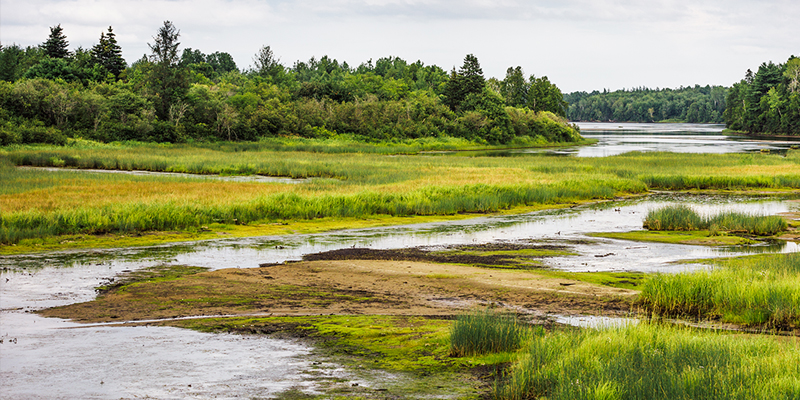
From the Florida Everglades to the San Francisco Bay Delta, wetlands play a vital role in our nation’s ecosystems. These biodiverse areas are rich in wildlife and plant species that protect surrounding areas from flooding, hurricanes, and erosion, and help naturally clean our water supplies.
However, wetlands across the United States are diminishing.
In Louisiana, coastal erosion has led to significant loss of wetlands, putting cities like New Orleans at greater risk from hurricanes. In Detroit and Miami, urban sprawl has reduced wetlands, replacing these biodiverse areas with developments, factories, and roads. The result: the United States’ total wetlands have been more than cut in half—today hovering around 6% of the US mainland.
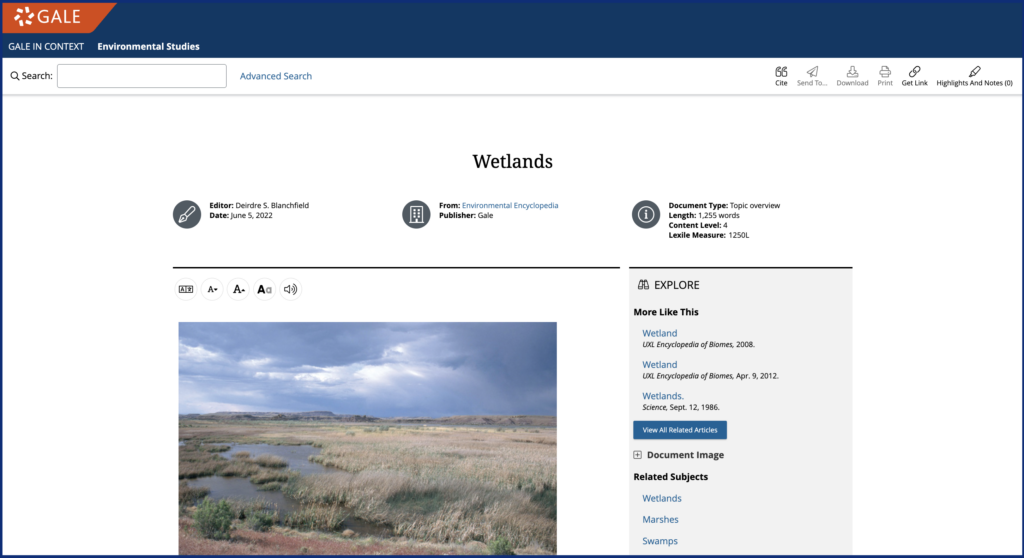
To introduce your students to wetlands and a wealth of additional topics, turn to Gale In Context: Environmental Studies.Powered by expert research, and grouped into hundreds of accessible and relevant topics, Gale In Context: Environmental Studies is perfectly positioned to help your students explore our wetlands from different angles: land and water use, sustainable cities, ecosystem diversity, and much more. Plus, rich multimedia resources add new dimension and texture to research, with dozens of videos, images, and audio resources for students to explore.
Why Are Wetlands Important?
Wetlands are incredibly biodiverse ecosystems—comparable to coral reefs and rainforests in their complexity. Amphibians, reptiles, birds, fish, and mammals all thrive in wetlands, alongside an incredible array of different types of plants. One-third of the United States’ threatened and endangered species live only in wetlands. Additionally, nutrient-dense wetlands serve as a habitat for organisms at the bottom of the food chain, meaning fish, amphibians, shellfish, and insects rely on wetlands for food.
Wetlands are equally important to humans. They serve as natural water purifiers, absorbing pollutants and filtering sediment so that groundwater is cleaner. The Florida Everglades, for example, supplies the Biscayne Aquifer—the sole source of drinking water in Miami.
Wetlands along rivers, streams, and coastal areas store water during heavy rains and storms, reducing the risk of flooding. By acting as a natural sponge, wetlands absorb hurricane storm surges, reducing the wave height and the storm’s energy before the hurricane moves inland. This helps minimize coastal erosion and protects inland communities.
These areas also offer a beautiful setting for a variety of outdoor recreation, from airboat tours in the Florida Everglades to hiking and biking the trails of the Great Dismal Swamp along the border of Virginia and North Carolina. Because wetlands sustain abundant fish and wildlife populations, they also support essential hunting and fishing, which support local economies.
Factors That Threaten Wetlands
Wetlands in the United States continue to diminish at an alarming rate. The US Fish and Wildlife Service reported that between 2009 and 2019, the country lost 221,000 acres of wetlands—a 50% increase in area lost over their previous reporting period.
Let’s look at some of the factors that threaten wetlands, and identify effective strategies to reduce these threats.
Urban Sprawl
Urban development is the greatest threat to US wetlands.
In Florida, efforts to expand the Miami-Dade County Urban Development Boundary to build an industrial complex at the edge of the Everglades threaten the area’s wildlife and overall ecosystem. In Michigan, the state’s agricultural, industrial, and urban development have resulted in the loss of an astounding 4.2 million acres of wetlands—about the size of Hawaii—over the course of the state’s history. The Detroit River lost nearly all of its wetlands due to development, impacting native fish and wildlife populations.
When developments erase these wetlands, flooding risks increase, water quality diminishes, and disruptions to water flow occur.
Drainage Ditches and Canals
Drainage ditches and irrigation systems may help crops grow, but they can negatively impact wetlands. They alter the natural water flow, and increase the risk of runoff from fertilizer and pesticides affecting wetlands. Even more, these ditches and canals have the potential to dry out wetlands, destroying plants and altering the wildlife habitat.
Coastal Erosion
Louisiana is losing its wetlands faster than any state in the country, with 80% of the nation’s wetlands loss occurring in Louisiana. Since 1932, the state has lost 1,900 square miles of coast—an area roughly the size of Delaware. Recent devastating hurricanes in the area contributed to this loss.
The impact of hurricanes has been heightened by oil and gas pipelines, which create canals that change water flow and increase saltwater intrusion. Rising sea levels also increase saltwater intrusion and lead to erosion, which damages wetlands. Levees along the Mississippi River, designed to prevent flooding, have a negative impact as well as they stop mud and sediment from flowing into the wetlands. Without that mud and sediment, the land erodes over time.
Pollution
Wetlands also face degradation caused by pollutants. Toxic chemicals from oil spills threaten birds, fish, and other wildlife. Air pollution can travel to wetlands, and nitrogen and sulfur can change water and soil chemistry. Excess nitrogen and sulfur can increase insect populations and disease outbreaks and disrupt ecosystem processes like nutrient cycling, potentially killing plants and animals. Contamination also weakens wetlands’ ability to control flooding, making surrounding areas more vulnerable to pollution and storm damage.
Efforts to Protect Wetlands
Protecting the remaining US wetlands is a collaborative effort. Eco-friendly infrastructure such as rain gardens and permeable pavements can slow and reduce stormwater runoff into wetlands, reducing pollutants and minimizing flooding. At the local level, city planners can reduce the impact of urban sprawl by creating conservation corridors to prevent developments from infringing on wetlands. In Boston, the Charles River Valley has been protected as a natural way to regulate water levels.
Conservation comes in many forms, and individuals can make conscious decisions to help protect this vital ecosystem in several ways:
- Throw away litter and recycle to stop waste from ending up in waterways and wetlands
- Use non-toxic cleaning products, and reduce the use of pesticides and fertilizers
- Follow the Leave No Trace Principles when visiting wetlands to avoid polluting or damaging the area
Enhance Environmental Studies with Gale In Context
Wetlands play a vital role in protecting shorelines, filtering water, and providing a home for wildlife, yet they face threats from coastal erosion, development, and pollution. Using Gale In Context: Environmental Studies resources, educators can explore reliable research on the importance of wetlands, the challenges they face, and strategies to conserve them. Our accessibility features make it easy for students to explore our resources on important topics in environmental studies.
If you aren’t already subscribing to Gale In Context: Environmental Studies, contact your local sales representative today!