

Known for his powerful home runs and larger-than-life persona, Babe Ruth is one of the most iconic figures in American sports history. Gale In Context: High School lets students examine the real-life person behind the legend, including his early challenges, historic achievements, and cultural influence.
Our database places Ruth in a broader historical context with authentic images, powerful video and audio clips, definitive reference works, and suggested topics so students can build new connections. Accessibility tools, including text-to-speech, dozens of translation options, and adjustable font sizes, empowers students of all backgrounds and abilities tune into the lesson with confidence.
Step up to the plate and learn more about the Sultan of Swat and how his legendary feats on the field shaped baseball history.
Babe Ruth: Meet the Man Behind the Legend
Born on February 6, 1895, George Herman Ruth Jr. grew up in Baltimore, Maryland. His parents were often absent, and as a result, he often got into trouble. At age seven, Ruth entered St. Mary’s Industrial School for Boys, a reform school where he spent much of his childhood. There, Brother Matthias Boutilier became a father figure for him, introducing the young Ruth to baseball—a decision that would shape both his life and the sport.
The Start of a Storied Baseball Career
Ruth’s innate skills quickly stood out as he played baseball for St. Mary’s under the mentorship of Brother Matthias. He was a natural talent and excelled at every position he played, including catcher, pitcher, third baseman, and shortstop.
When Ruth was 19, Jack Dunn, the owner of the then-minor league Baltimore Orioles, offered him a spot on the team. Having spent 12 years at St. Mary’s, Ruth had little experience navigating life outside the institution. In fact, he even needed a legal guardian to leave St. Mary’s, sign his baseball contract, and begin his career—a role Dunn accepted. During this transition, Ruth turned to Dunn for guidance, which led to his new teammates referring to him as “Dunn’s Babe.” The nickname stuck, and Babe Ruth was born.
The Sultan of Swat
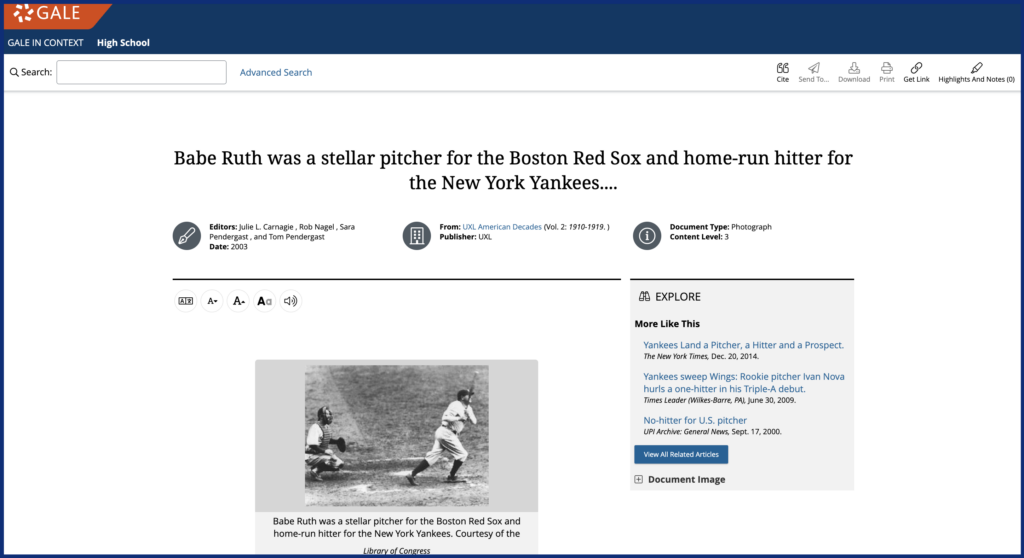
Ruth’s stint with the Baltimore Orioles was short-lived—he moved to the Boston Red Sox in 1914, debuting as a left-handed pitcher. He played a key role in the team’s World Series championships in 1915, 1916, and 1918 and earned a league-wide reputation for his powerful arm and fierce competitiveness.
In 1919, Ruth led the league with 29 home runs—17 more than his closest rival. The following season, the Red Sox sold Ruth to the New York Yankees, and a historic run with his new team began. According to popular legend, this resulted in the “Curse of the Bambino,” in which the Red Sox—once seemingly an unstoppable force in Major League Baseball—failed to win another World Series until their victory in 2004, after 86 years.
During his time at the Yankees, Ruth captured national attention as the league’s most dominant slugger. His success helped usher in the Live Ball Era, when changes to pitching rules ushered in more effective batting—including a surge in home runs. In 1920, the start of the Live Ball Era, Ruth hit a record-breaking 54 home runs, only to break his own record the following year with 59 homers—and again in 1927, when he hit 60 home runs. The record stood for 34 years until Roger Maris broke it in 1961.
A Record-Setting Career
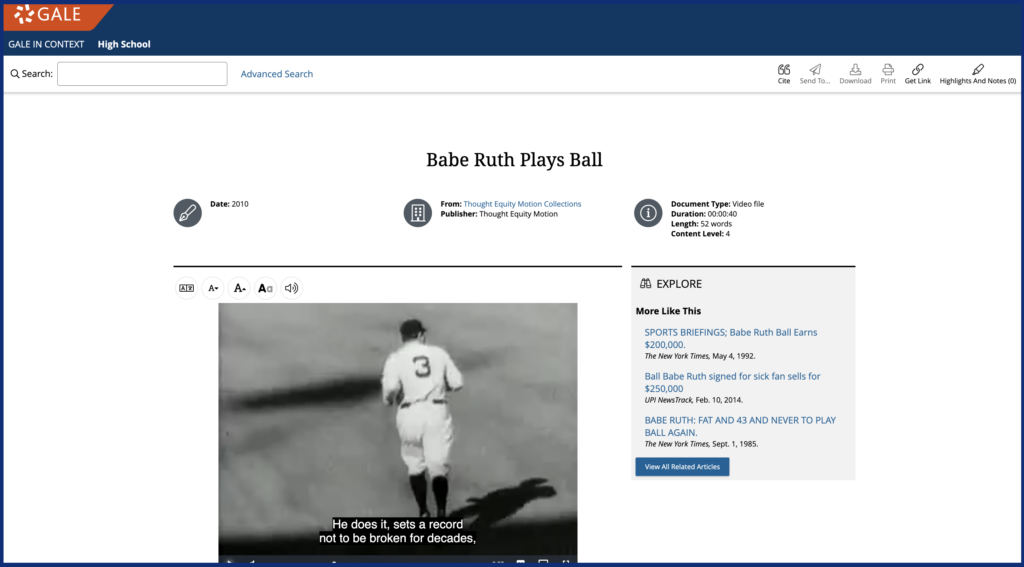
Babe Ruth’s run with the New York Yankees was one for the record books. Over his career, Ruth hit 714 home runs—a record he held until Hank Aaron broke it in 1974. He won seven World Series titles, including four with the Yankees. The team’s success with Ruth led to the opening of Yankee Stadium in 1923, sometimes known as “The House that Ruth Built.”
His impact on the sport extended far beyond New York, transforming baseball into a high-energy spectacle that attracted huge crowds. Attendance increased significantly across the Major League as the Live Ball Era ushered in a new style of play. Even opposing teams wanted to see Ruth play in person, driving ticket sales.
Off the field, Ruth emerged as one of America’s first true sports personalities, creating a model for athletic fame that others would follow. He was one of the first athletes to sign with an agent who helped him navigate his celebrity status. Ruth was a pioneer in celebrity product endorsements, adding his name to everything from Babe Ruth underwear to Ruth’s Home Run candy bars. Ultimately, Ruth helped transform Major League Baseball into America’s premier professional sport.
Meet the Other Legends of Ruth’s Era
Babe Ruth might have been the defining figure of 1920s Major League Baseball, but he wasn’t the only one. Ruth and teammate Lou Gehrig represented one of the most legendary duos in baseball history. Both athletes delivered powerful offensive performances, with Gehrig’s steady production complementing Ruth’s long home runs. Despite comparable skills, the two had drastically different personalities—Ruth was loud and boisterous, while Gehrig was quiet and hardworking.
Ty Cobb’s illustrious career with the Detroit Tigers also overlapped with Ruth’s, but Cobb had already been playing for 15 years in the Dead Ball Era, marked by low scoring and defense-heavy games. As a result, many sportswriters consider Cobb the best player of the Dead Ball Era, much like they viewed Ruth as the Live Ball Era’s most valuable player.
Playing for the Saint Louis Cardinals, Rogers Hornsby was an accurate, consistent hitter—often considered the best right-handed hitter in the league (Ruth batted left-handed). Hornsby possessed incredible precision and technical mastery at the plate, which he brought to two World Series matchups against Ruth’s Yankees. In 1926, the Cardinals defeated the Yankees, but just two years later, Ruth led the Yankees to a World Series title over the Cardinals.
With Gale In Context: High School, students can compare and contrast Ruth and his career to other baseball legends of the era, including Walter Johnson and George Sisler.
Learn more about baseball legend Lou Gehrig and his diagnosis with ALS.
The Personality Behind the Plate
Babe Ruth might have had a reputation for his wild off-the-field antics, but he also endeared himself to his teammates and fans through his generosity, work ethic, and charm. Ruth never forgot where he started, often giving back to charities dedicated to helping children, visiting orphanages and children’s hospitals, and signing autographs for his adoring young fans. He even established the Babe Ruth Foundation to support underprivileged youth.
In 1926, Johnny Sylvester, an 11-year-old Yankees fan, was sick in the hospital. His father called the Yankees, asking for a Ruth-autographed baseball for his sick son. Ruth not only delivered the autographed baseball, he also visited Sylvester in the hospital and promised to hit a home run for him. In the following game, he hit three home runs, and Sylvester recovered from his illness.
Ruth’s fame extended beyond the baseball diamond. During the 1920s, he also starred in several silent films, including Headin’ Home, where he played a fictionalized version of himself. He also made cameos in other films, such as Harold Lloyd’s Speedy. These film appearances elevated Ruth beyond sports, highlighting how his fame captured the attention of the nation in the 1920s.
By examining news sources, audio clips, and images in Gale In Context: High School, students can explore how the media helped elevate Ruth’s celebrity status beyond baseball.
The expansive reach of Gale In Context: High School makes it ideal for wide-ranging classroom lessons. It includes thousands of biographies, including for athletes past and present.Students can access the biographies of other athletes whose celebrity transcended sports, from basketball’s Michael Jordan to tennis’s Serena Williams.
If you aren’t already subscribed to Gale In Context: High School, contact your local sales representative today!